Conservation Area in the Waters of Buru, Buru Regency, Maluku Province
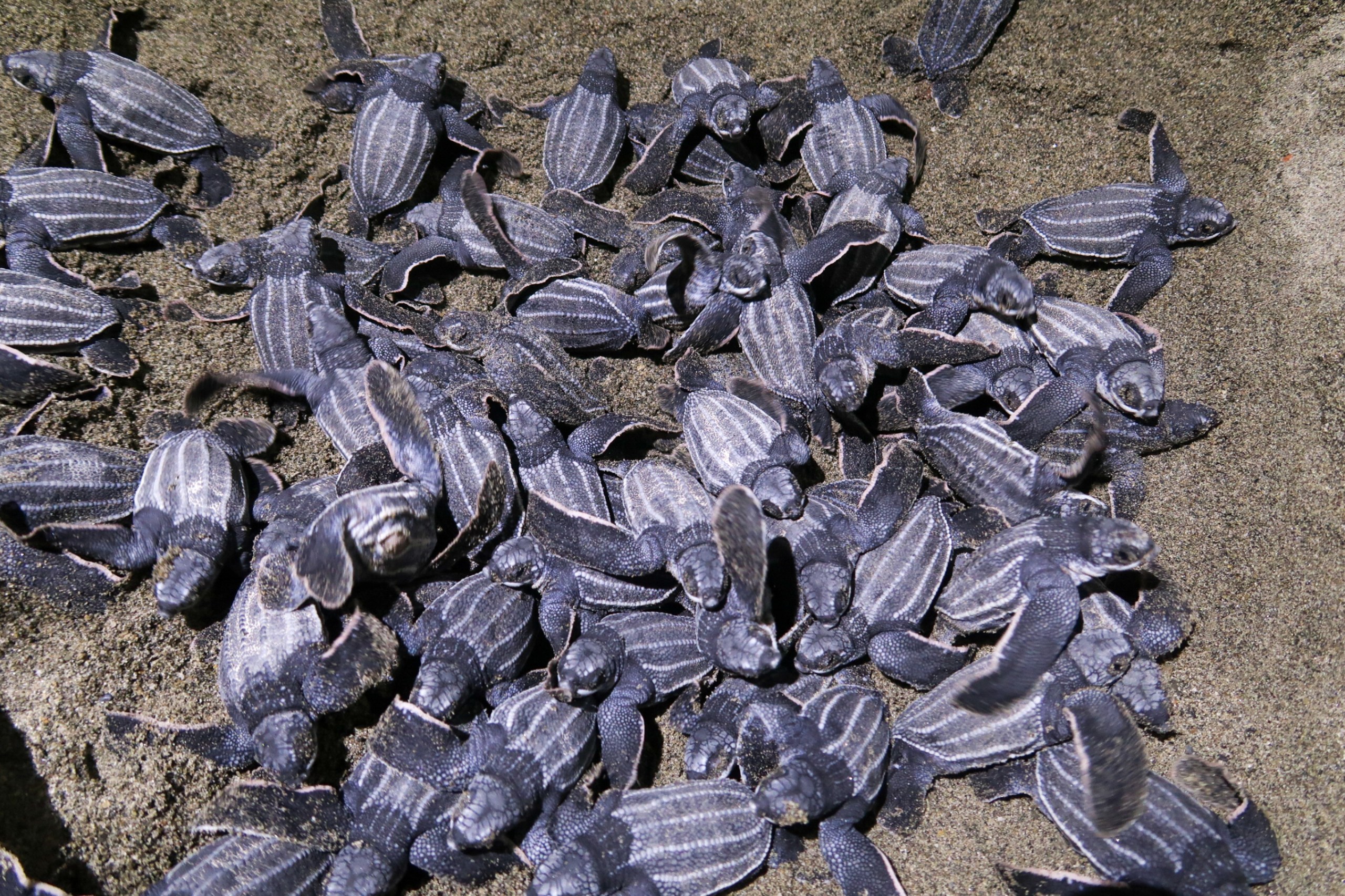
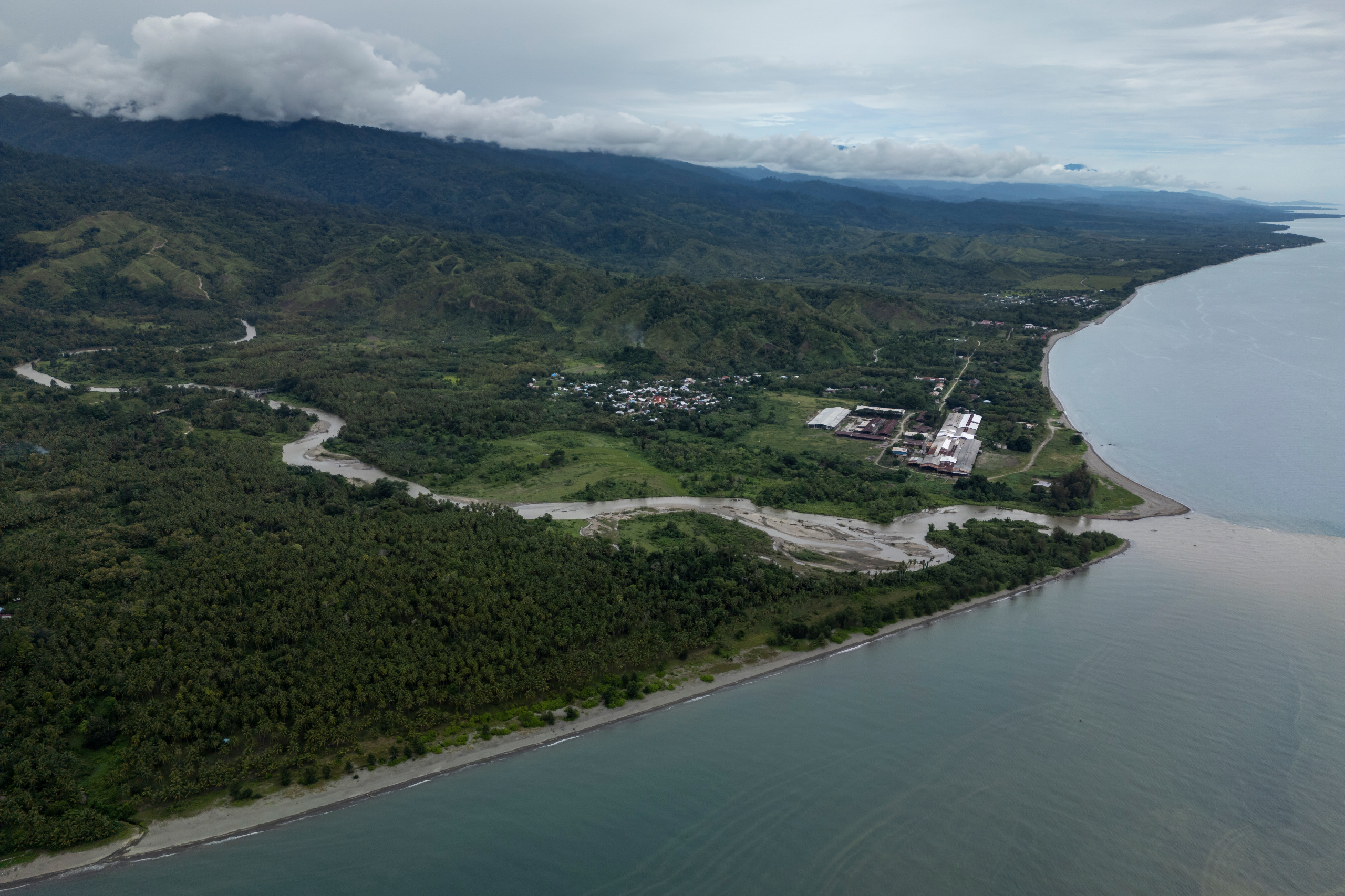
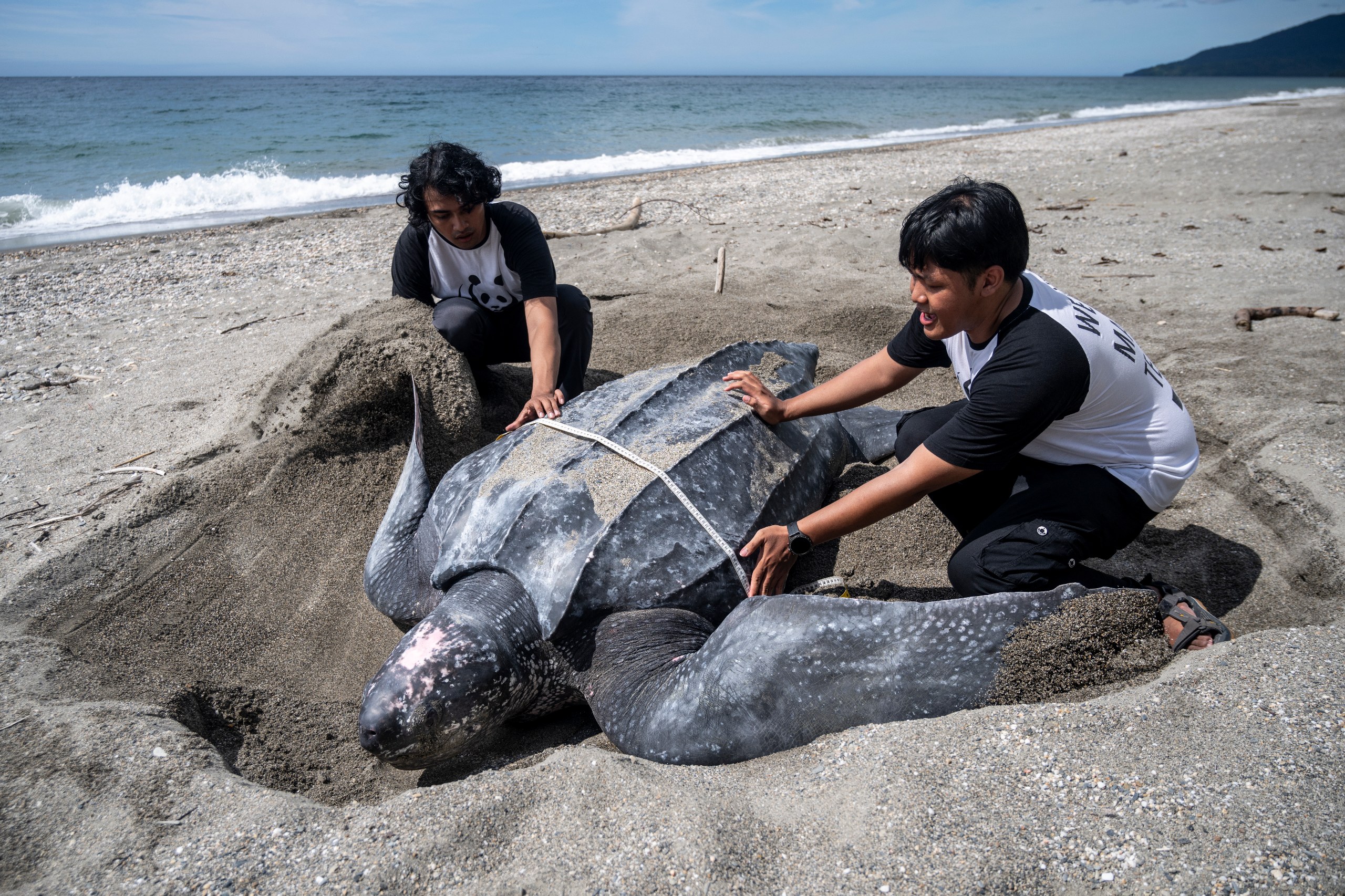
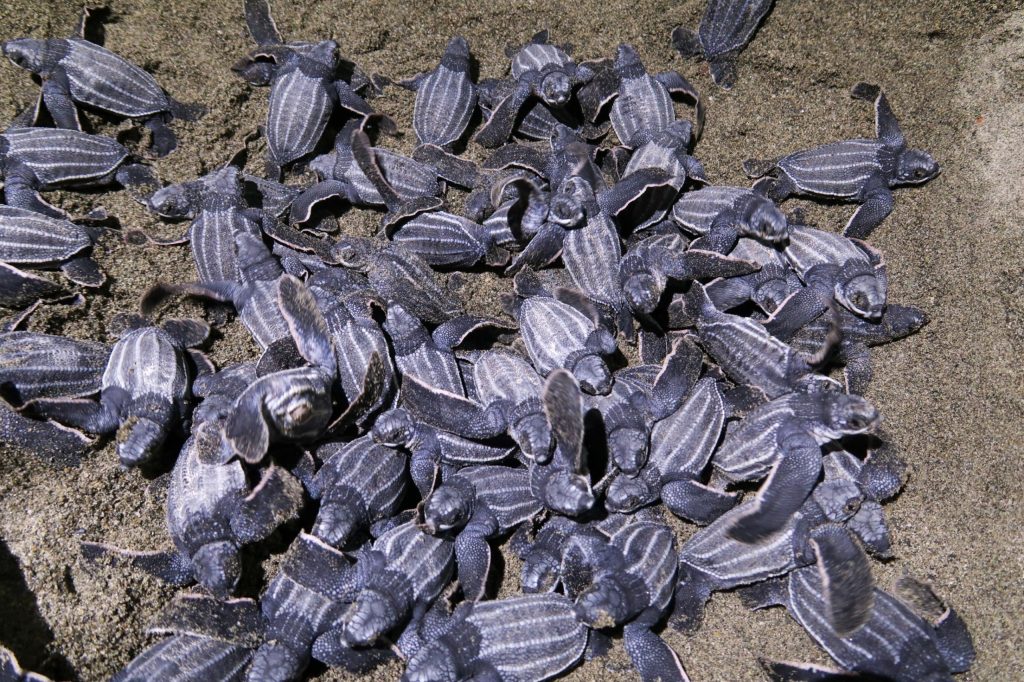
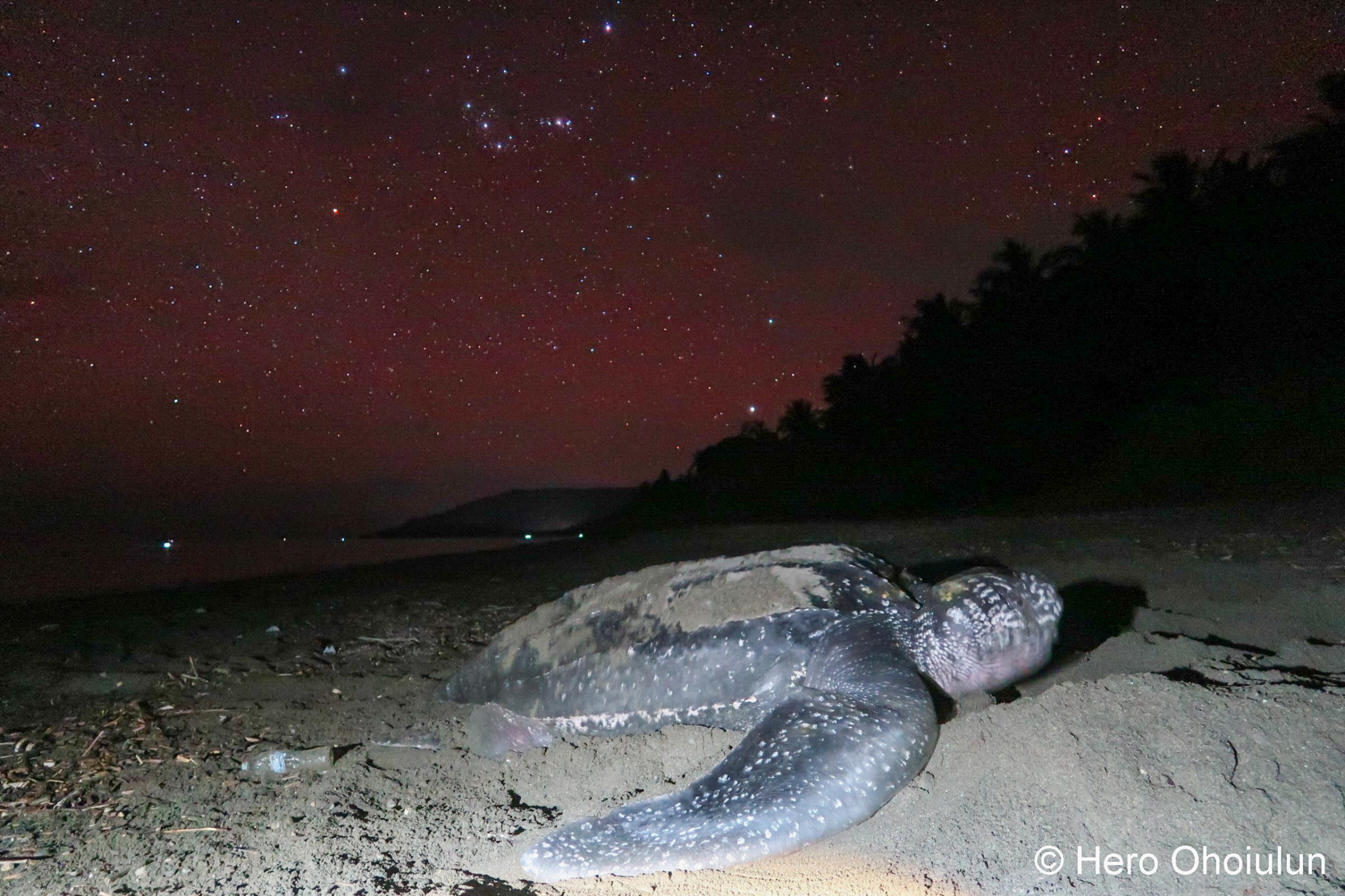
The Buru Marine Protected Area (Buru MPA) is located in Buru Regency, Maluku Province, and forms part of the seascape connecting the Seram Sea to the north with the Banda Sea to the south. This area harbors coastal and marine ecosystems that are critical for biodiversity, particularly sandy beaches that serve as nesting habitats for various sea turtle species. The northern coast of Buru Island, specifically Fena Leisela District, represents the second-largest leatherback sea turtle (Dermochelys coriacea) nesting site in Indonesia after Jeen Womom in Southwest Papua. The nearly 14-kilometer stretch of nesting beach also provides habitat for olive ridley turtles (Lepidochelys olivacea), green turtles (Chelonia mydas), and hawksbill turtles (Eretmochelys imbricata).
Details
|
Establishment Date |
November 11, 2025 |
|
Area |
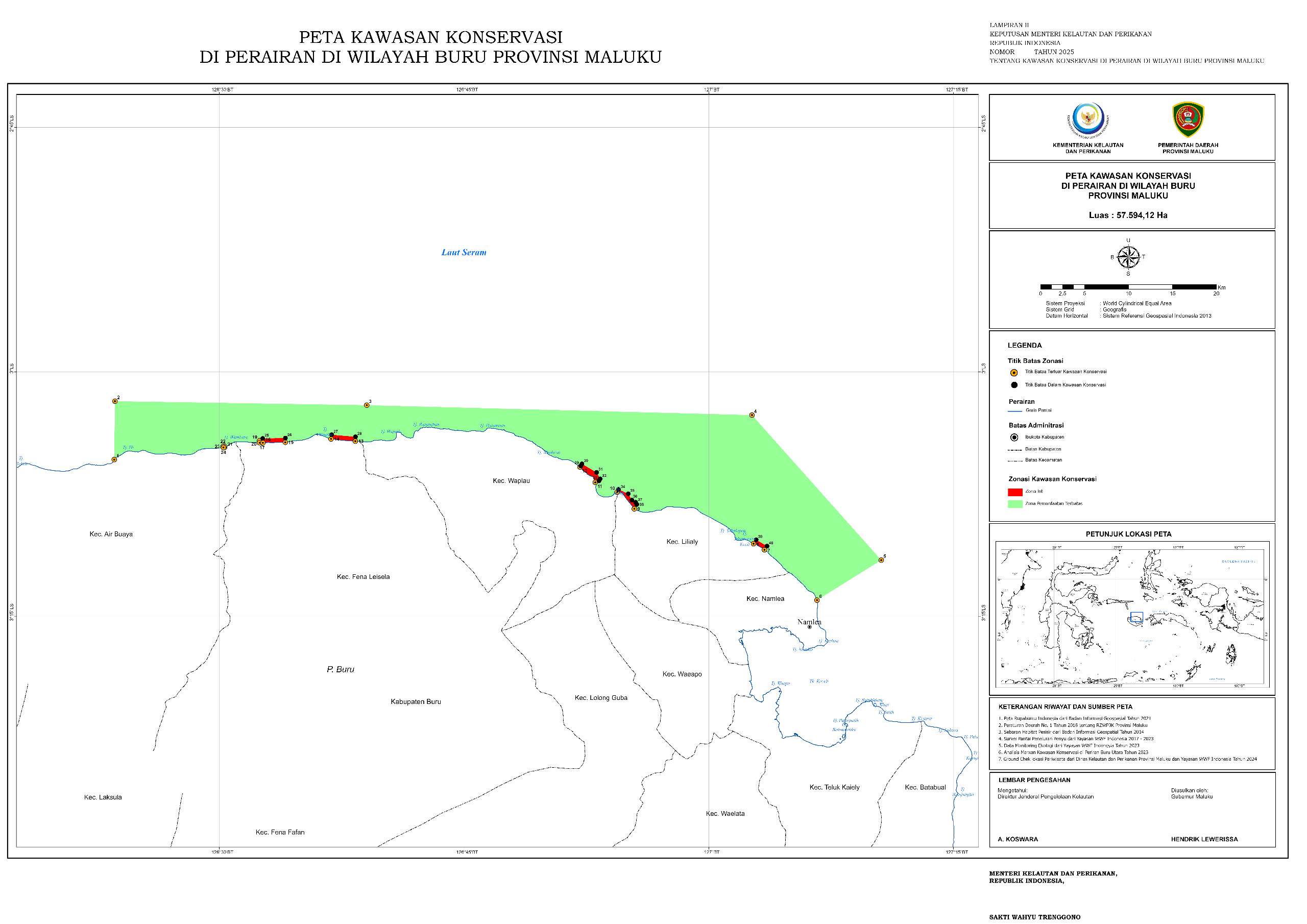
57,594.12 hectares, covering marine areas and critical coastal habitats for the protection of leatherback sea turtles and marine biodiversity in Buru Regency. |
Zoning Map
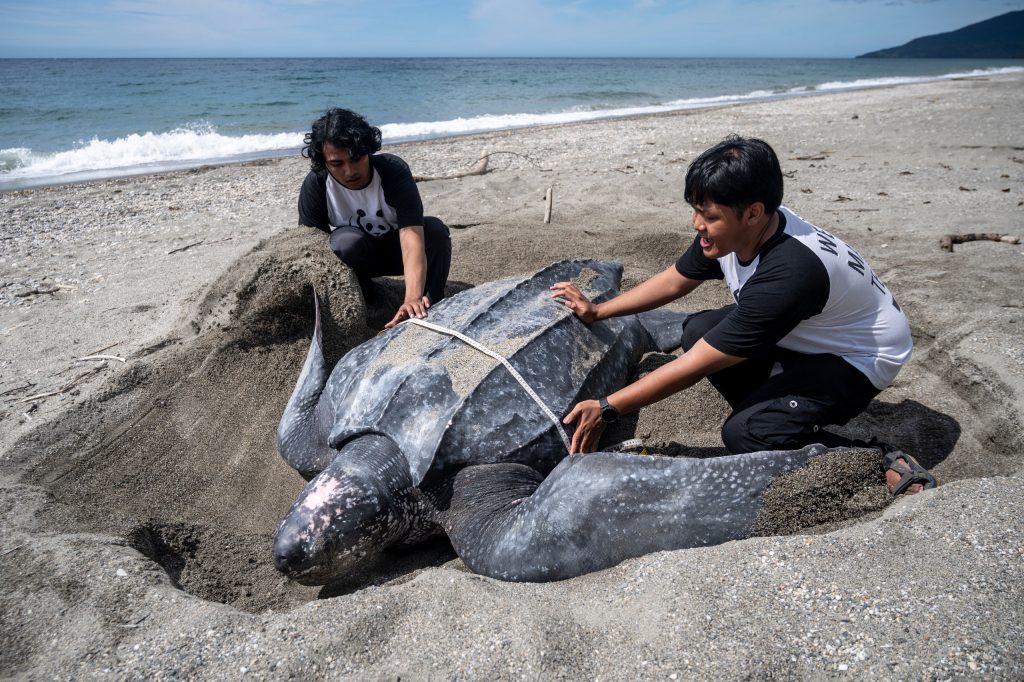
Based on monitoring conducted by WWF-Indonesia in collaboration with local communities, an average of approximately 199 leatherback turtle nests were recorded annually over a five-year period reported in 2025. The leatherback turtles utilizing Buru waters belong to a long-distance migratory population, with connectivity reaching as far across the Pacific Ocean to the west coast of the United States. The presence of these critical habitats positions the Buru MPA as a strategic area for leatherback turtle protection and the sustainability of both regional and global marine ecosystems.
The stretch of sandy beaches in Fena Leisela District, particularly around Waenibe, Waspait, and Wamlana villages, holds significant ecological value as well as potential for sea turtle conservation-based ecotourism development. Coastal communities on Buru Island maintain a close relationship with the marine environment, both as a source of livelihood and as part of their local cultural identity. Leatherback turtles are locally known by the community as teteruga salawaku, referring to their body patterns that resemble the traditional Maluku shield (salawaku).
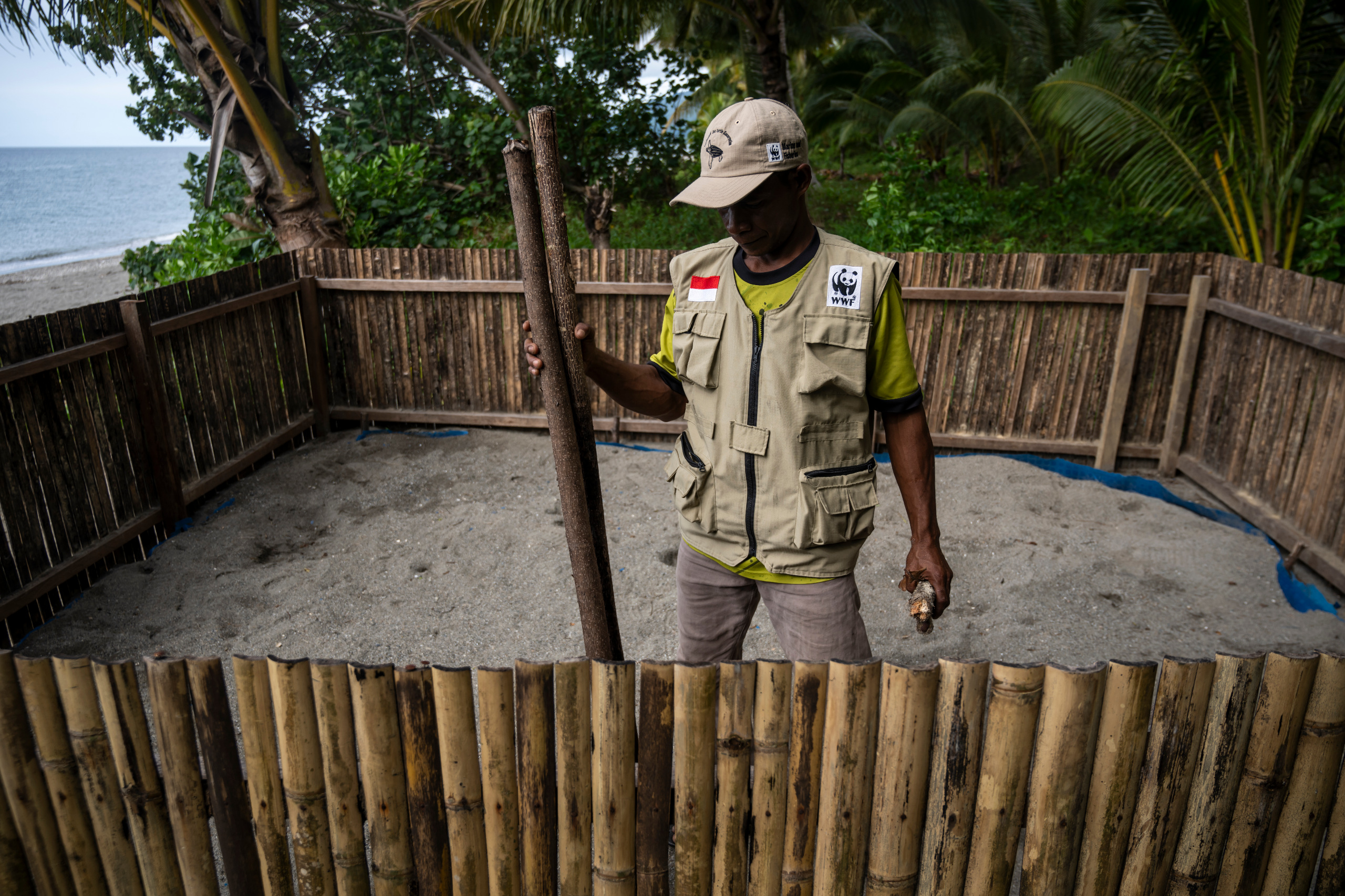
Historically, egg poaching and hunting of nesting females posed a serious threat to the turtle population in this region. However, through guidance from WWF-Indonesia alongside the government and local communities, turtle protection practices have advanced significantly. Turtle nest poaching, which previously reached 94%, was successfully reduced to 0% by 2024 through beach patrols, nest monitoring, community education, and the strengthening of local conservation institutions.
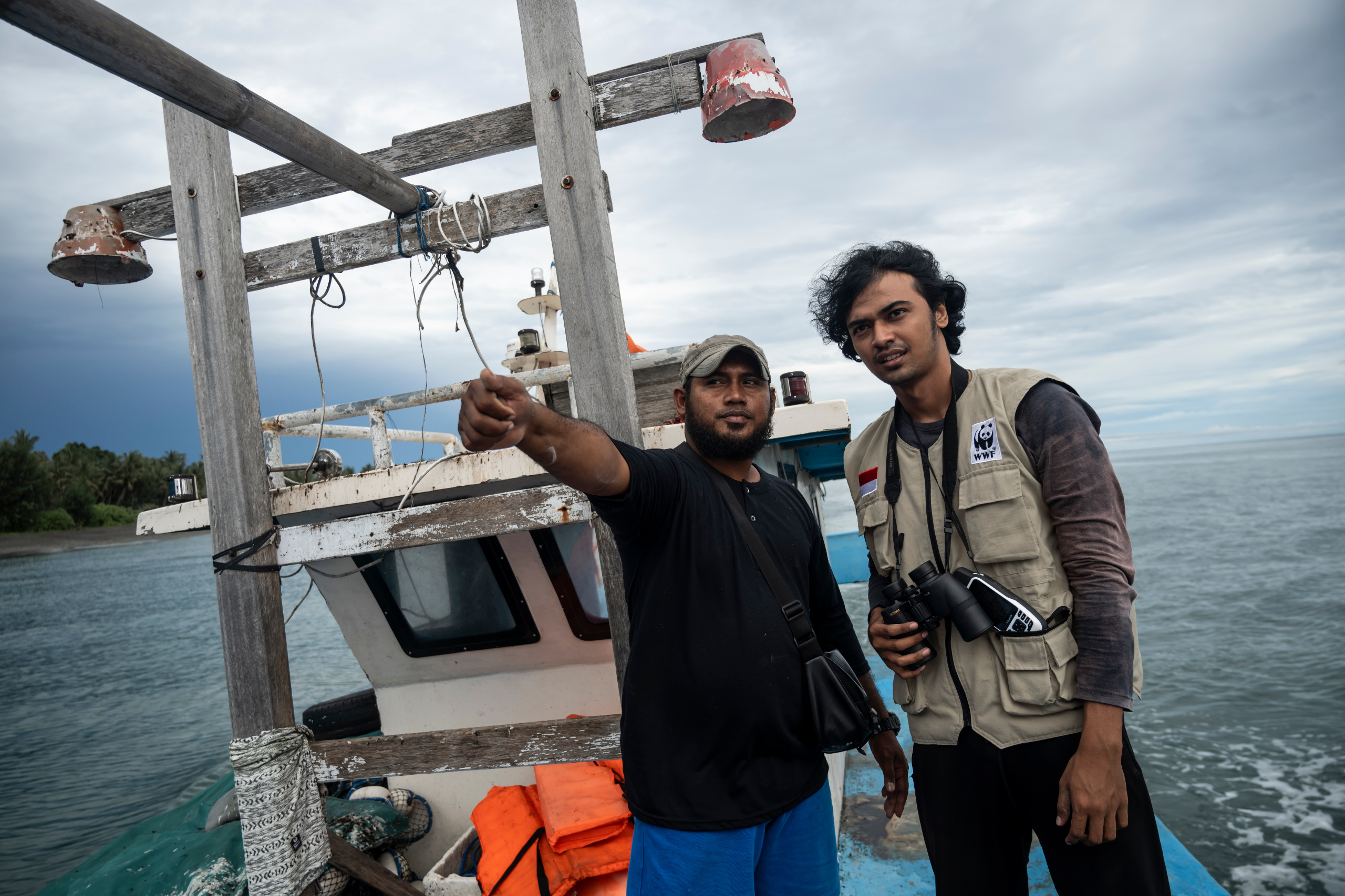
The Sugiraja Watulu Community-Based Surveillance Group (Pokmaswas), established in 2021, plays a pivotal role in patrolling nesting beaches and safeguarding turtle nests. This success underscores the importance of direct community engagement in transforming destructive resource use into a community-led conservation movement. Governance of the Buru MPA emphasizes a collaborative approach that integrates turtle nesting habitat protection, area surveillance, sustainable marine resource management, and coastal community empowerment.
Management of the area involves the Maluku Provincial Government through the Marine Affairs and Fisheries Service, the Ministry of Marine Affairs and Fisheries, the Buru Regency Government, village governments, Pokmaswas Sugiraja Watulu, and conservation organizations such as WWF-Indonesia. Since 2017, WWF-Indonesia has provided technical support through nesting habitat surveys, population and nest monitoring, community capacity building, and assistance throughout the conservation area designation process.
In 2025, the area was officially established as part of national efforts to expand the protection of critical marine species habitats and support Indonesia’s 30×45 marine conservation vision. Future management strengthening is directed toward improving patrol effectiveness, conducting long-term turtle population monitoring, enhancing local institutional capacity, and developing alternative livelihoods that support long-term conservation sustainability.